Fourth INMIP International Horizontal Learning Exchange
Potato Park, Pisaq, Cusco, Peru
Resilient Biocultural Landscapes Walking Workshop held in the Potato Park
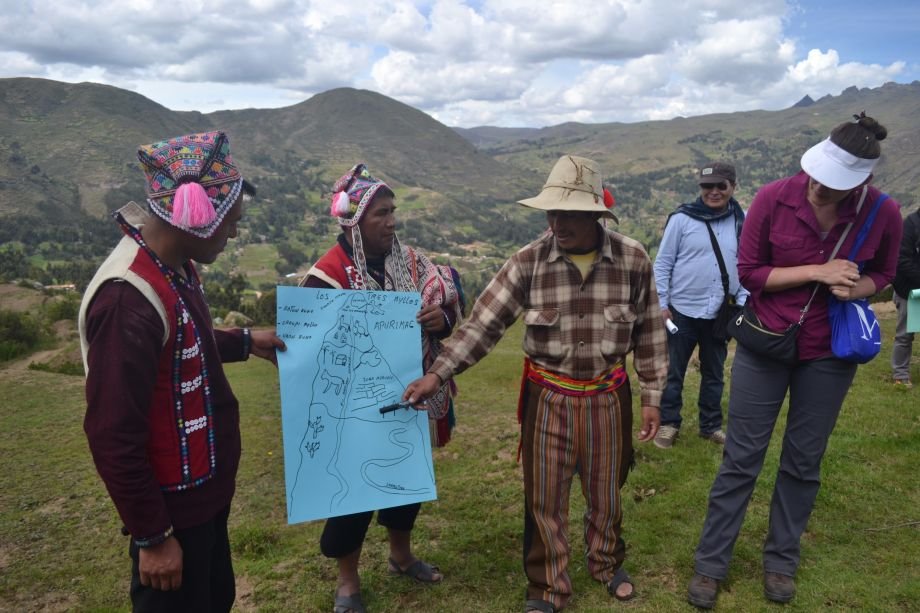
The principle aim of the capacity development session in Cusco was to share the experiences, accomplishments, successes and lessons learned of the Potato Park communities in establishing a Biocultural Heritage Landscape. Participants also evaluated the feasibility of establishing biocultural heritage landscapes in their respective countries based on the community-managed landscape model developed by the Potato Park. INMIP, in association with Asociación ANDES and the International Institute for Environment and Development (IIED), brought together community experts and practitioners of Bhutan, China, India, Kyrgyzstan, Papua New Guinea, Peru, the Philippines, Taiwan, Tajikistan, Thailand and the United States.
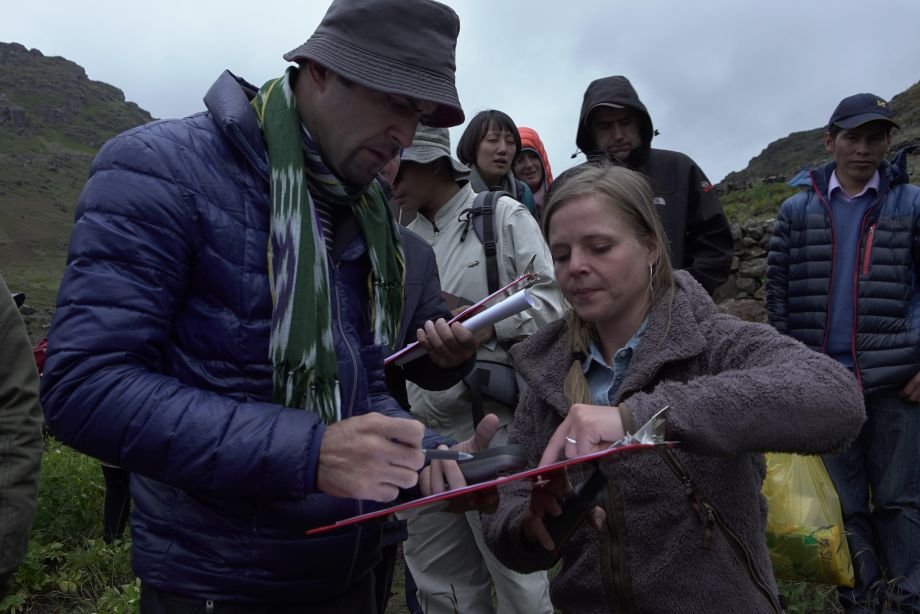
The training session gave special focus to planning, governance and the use of biodiversity, the strengthening of indigenous identity, and the legal and juridical framework for the development of biocultural heritage landscapes. Other issues included strategies for the mobilization of scientific and traditional knowledge as a buffer against biotic and abiotic stressors and a defense against social, economic, and ecological shocks.
The training session gave special focus to planning, governance and the use of biodiversity, the strengthening of indigenous identity, and the legal and juridical framework for the development of biocultural heritage landscapes. Other issues included strategies for the mobilization of scientific and traditional knowledge as a buffer against biotic and abiotic stressors and a defense against social, economic, and ecological shocks.
Dowloand the Declaration or Event Report Clicking on the Buttons Below
The workshop culminated in the Potato Park Declaration that calls on governments, religious and spiritual leaders, research organizations, civil society organizations and the international community to recognize the value of indigenous peoples´ spiritual values and expressions, the critical importance of biocultural heritage and the important contribution of indigenous mountain peoples knowledge to the conservation and sustainable use of biodiversity and provision of ecosystem services. It calls for the legal recognition and protection of indigenous peoples’ Biocultural Heritage Territories, landscapes and land rights and support for participatory action-research with indigenous mountain communities that fully respects their traditional knowledge, local institutions, and collective rights to knowledge and innovations to enable communities to address the urgent threats posed by environmental and socio-economic changes, particularly climate change.
The Walking Workshop was organized by INMIP, the Potato Park and Asociacion ANDES with the generous support from the Office of the Second Vice President of Peru, Ministry of Environment of Peru, The Ministry of Foreign Affairs, the Regional Government of Cusco, the Regional Government of Apurimac, the United Nations Development Program (UNDP), Tamalpais Trust, The New Field Foundation, The Christensen Fund, The International Institute for Environment and Development, and The Swift Foundation.