Members
The International Network for Mountain Indigenous Peoples (INMIP) was established in “year” at the Himalayas of Bhutan.
10 Countries

Who We Are
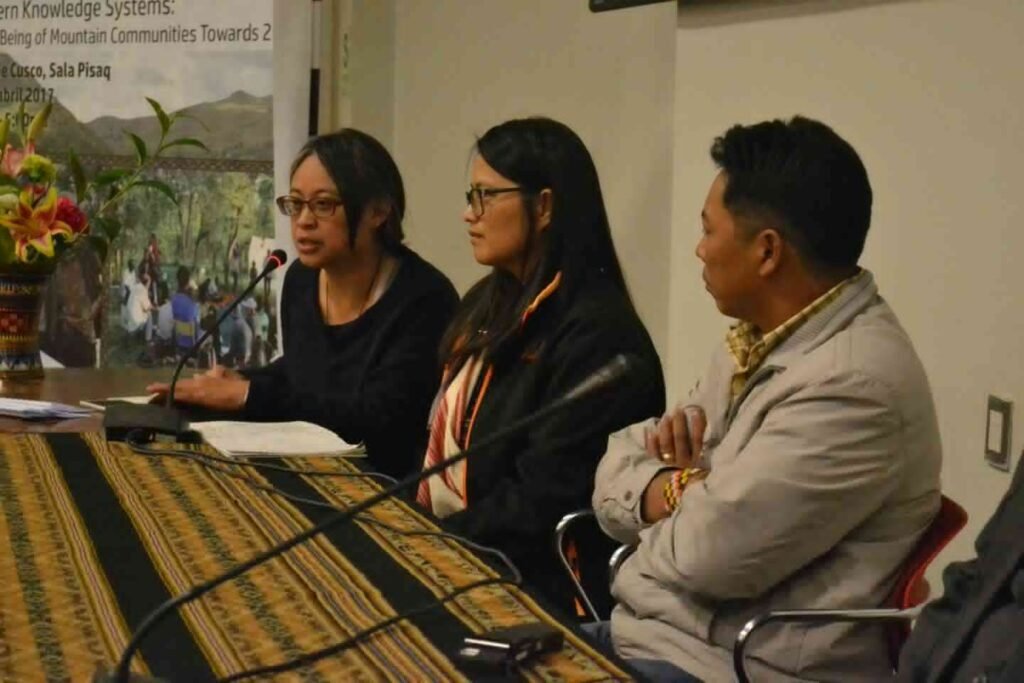
The network has celebrated three International Learning Exchanges (Bhutan in 2014, Tajikistan in 2015, and China in 2016) each producing a Declaration outlining key messages that call on governments, research and civil society organizations and the international community to recognize the value of biocultural heritage and traditional knowledge for strengthening natural resource management systems. INMIP annual Learning Exchange strengthens critical mass and provides a space for the sharing of traditional knowledge and practices for local food autonomy and climate governance.
MEMBERS
Asociación ANDES, Peru
ANDES’ support takes the form of independent research and analysis; promoting collective action; networking at local, regional, and international levels; and fostering new forms of knowledge creation, partnerships, and alliance-building.

Center for Chinese Agricultural Policy (CCAP), China
CCAP’s works to analyze policies related to natural resource management for the strengthening of sustainable food and agricultural systems and to provide policy suggestions that address the challenges facing China´s agricultural and rural development. CCAP also works on pilot policy research programs that assess and influence policy development and implementation, and contribute to sustainable development in China.
Farmers Seed Network (FSN), China
Fresh Produce Development Agency (FPDA), Papua New Guinea
As part of this development work that links farmers to markets, FDPA collaborates with actors in the value chain such as transport providers and market players such as hotels, catering companies and supermarkets.
Mountain Societies Development Support Programme (MSDSP), Tajikistan
To achieve its goal, MSDSP operates a multi-sector programe which engages in natural resource management, early childhood development (ECD) and community health.
Public Foundation Bio-Muras, Kyrgyzstan
Our organization also conducts training workshops on horticulture and the establishment of fruit nurseries.

Non-Timber Forest Products (NTFP) – Exchange Programme, Philippines
(1) organizing and strengthening forest-dependent communities; (2) capacity building; (3) incorporating indigenous knowledge systems and practices (IKSP) into community-based enterprises; (4) integrating sustainable resource management planning into enterprise operations; (5) developing products and appropriate technologies; (6) identifying appropriate markets; (7) linking community-based enterprises to value chain actors; (8) development of standards and appropriate certification schemes; (9) providing access to finance; and (10) monitoring impacts.
Pgakenyaw Association for Sustainable Development (PASD), Thailand
Community members are also conducting community-based research in order to generate local evidence that can contribute to achieving recognition and acceptance by the government.
Research Center of Humanistic Innovation and Social Engagement (ReCHISE), Taiwan
Through this project, we work with three different communities in Taiwan, including urban, suburban, and indigenous communities, to study the structural problems prohibiting people to age actively and locally and to find innovative solutions with the empowerment of the local people. Our goal is to develop a model of care that covers people’s medical, ecological, social, and cultural aspects of life.
The Potato Park, Peru
This genetic diversity has been maintained through the practice of the Andean cosmovision or “ayllu” that promotes an integrated, holistic model of co-living between physical, biotic, and cultural elements. The Quechua communities of the Potato Park apply an alternative development approach that is based on local business models that enhance the sustainable use of local resources and successfully integrate both ancestral knowledge and modern innovations as a strategy to secure the resilience and productivity of agro-mountain systems.

University of Goroka, Papua New Guinea
A promotion of the uniqueness of Papua New Guinea and South Pacific cultural heritage will be pursued through the content of the courses in such areas as the Arts, Languages, Beliefs, Commerce and Natural Environment. UoG believes in sustaining and promoting diverse Pacific cultural heritage.
Kenya Forestry Research Institute (KEFRI), Kenya
The mandate of KEFRI is to undertake research in forestry and allied natural resources disseminate research findings; and establish partnerships and cooperate with other research organizations and institutions of higher learning in joint research and training. The institute conducts research and development activities under five thematic areas namely: Forest productivity and Improvement; Biodiversity and Environment Management; Forest Products Development; Social-economics, Policy and Governance and Technical Support Services.
The Institute’s research is tailor-made to address the unique needs of the various Eco-regions in Kenya hence it has 5 regional research programmes. These include; Central Highlands Eco-region Research Programme, Rift-Valley Eco-region Research Programme, Drylands Eco-region Research Programme, Lake Basin Eco-region Research Programme and Coast Eco-region Research Programme. The Eco-region research programmes have head offices in Muguga, Londiani, Kitui, Maseno and Gede respectively. The Institute also has one national Forest Product Research Centre located in Karura.