Topics
The Role of
Seed Exchange
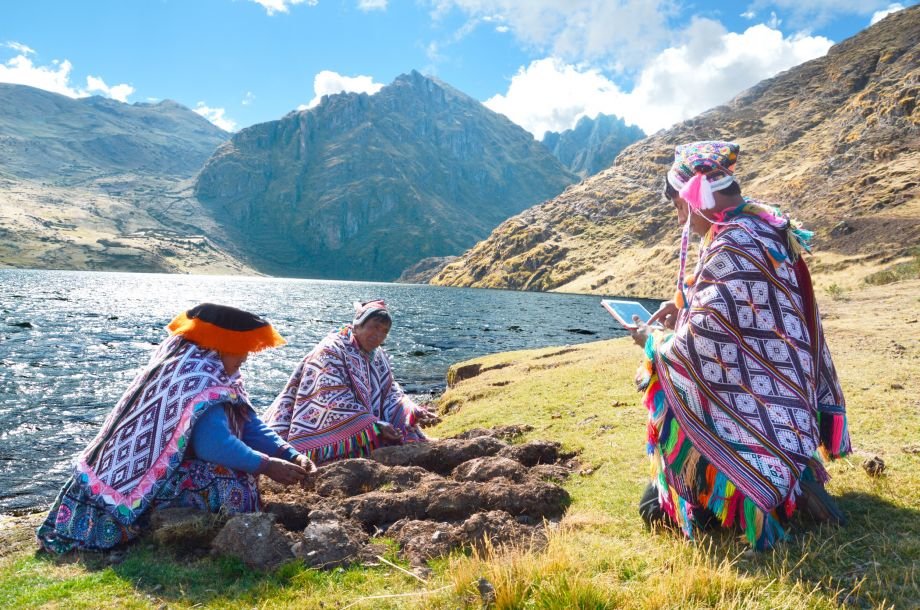
Seed Exchanges are an important part of Horizontal Learning Exchanges. At the workshops in Bhutan and Tajikistan, seeds were exchanged between communities. It was discovered that in Papua New Guinea, maize from China grows much better than local maize, but pumpkin from China proved susceptible to pests. In China, rice from Bhutan did not perform well at the lower altitude and more tropical climate. In Tuggoz, Tajikistan, a farmer has planted buckwheat from Papua New Guinea and maize from Jangbi in his kitchen garden. In Jafr, Tajikistan, potatoes obtained from the Potato Park, Peru during a learning exchange five years earlier have been adapted successfully after five years of selection, but maize from the Potato Park suffered from disease and did not grow well in Jafr.
Participating members of the mountain network are working to document and share the conditions in each community that has shared seeds: the altitude, whether it is tropical or not, temperature, rainfall and frost conditions.Participants also emphasized the need to ensure that the seeds exchanged are germ-free by working with relevant practitioners and experts, and that seed exchange is done legally. The FAO International Treaty on Plant Genetic Resources for Food and Agriculture (FAO Treaty) has created a Multilateral System which can in theory be used by communities as well as countries and gene banks for this purpose. This would also facilitate the recognition of farmers’ knowledge of and rights to seeds. Most of the countries in the network are parties to the FAO Treaty, except China, Taiwan and Tajikistan. Thailand has signed but is not a party.
Seed Exchanges continued in both the Stone Village (2016) and the Potato Park (2017) Learning Exchange with the active participation of the mountain communities.